Beyond the Classroom: Why NYP’s OncoVR Team Needs to Dream Bigger

Link to NYP's webstory here.
When I recently sat down with the student team behind OncoVR

—Min Ruo Teo, Mabelle Ng, Sheena Tan, Caleb Lim, Ng Ling Hui and Alyssa Tan from Nanyang Polytechnic (NYP)— I expected a standard conversation like one of a lecturer discussing with students regarding their final-year academic project.
I was, from 2022 to 2025, an adjunct lecturer there covering Entrepreneurship in the School of IT. What I encountered instead was a display of rare technical competence, deep human empathy, and remarkable problem-solving ingenuity.
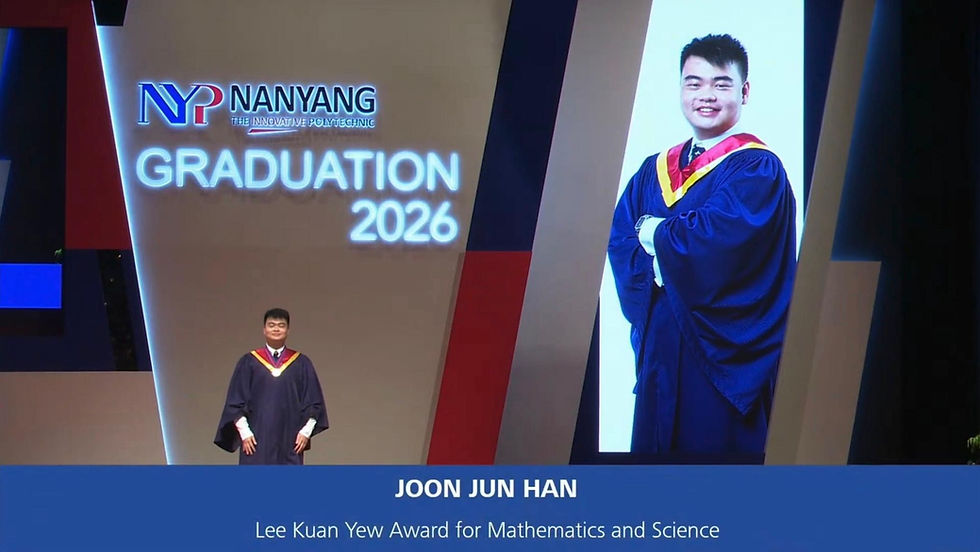
The team was recently awarded the Lee Hsien Loong Interactive Digital Media Smart Nation Award (2026) for their work in OncoVR, a virtual reality simulation built to prepare pediatric cancer patients for the daunting process of radiotherapy. Conceived after the National Cancer Centre Singapore (NCCS) reached out to NYP for development support, the project quickly earned recognition, eventually being submitted for the prestigious IDM Smart Nation award. Yet, as I listened to the team discuss their progress and future plans, I was struck by a quiet paradox: despite holding a potential game-changer for pediatric oncology in their hands, there remains a tendency to view OncoVR as merely a 'fun school assignment' or a temporary milestone.
My message to this brilliant team is clear: you have created something extraordinary, but now you need to be bolder.
Technical Mastery Meets Compassionate Design
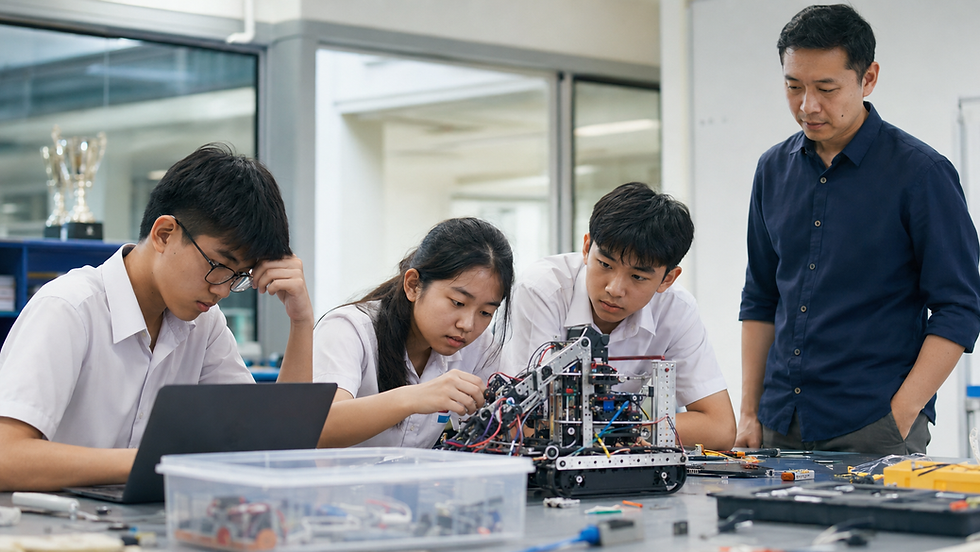
Developing effective virtual reality for healthcare is notoriously complex, especially when designing for children. The team faced significant hardware and software bottlenecks early in development, particularly around optimizing heavy 3D models to run smoothly within the hardware constraints of VR headsets.

Under the hands-on guidance of their lecturer, Mr. Frety, the students pushed past these technical barriers, mastering Unity to build an immersive, lag-free environment. He guided the team to research and implement advanced motion capture animation techniques, bringing believable, comforting character movements into the virtual world to soothe young patients. Mabelle was the lead mocap artist and Sheena chipped in to clean up the animation-experience towards the end.
This isn't just routine coursework; it is high-caliber med-tech development driven by genuine passion. The technical execution demonstrates that these students are not just academically capable—they are industry-ready engineers capable of building solutions that directly alleviate human suffering.
The Soul in Human-Centric Technology
In an era dominated by rapid AI advancements, the team's approach to human-centric design stands out. During our interview, Caleb made a poignant point: human art and human-designed experiences possess a 'soul'—an emotional resonance and empathetic depth that artificial intelligence simply cannot replicate. Min Ruo built upon this sentiment, noting that human adaptability, emotional intelligence, and soft skills are irreplaceable when dealing with sensitive medical contexts.
For a child facing radiation therapy, fear is often as overwhelming as the physical treatment itself.
OncoVR bridges this gap by replacing anxiety with understanding, turning a terrifying medical room into a familiar, interactive space. This level of emotional intuition cannot be automated. It requires thoughtful, compassionate human design—the exact quality this student team possesses in abundance.
Shedding the 'Student Project' Mindset

Despite these achievements, the project now stands at a critical crossroads. When asked about commercialisation and long-term execution, the team expressed reservations. Sheena noted that diverging paths after graduation—including university admissions, entering the workforce, and National Service (NS) commitments—make ongoing coordination difficult. Min Ruo added that the team is open to continuing development primarily if NCCS continues to engage and lead the initiative.
This is where I believe the team must pivot their thinking. Waiting for institutional hand-holding or external prompts is a classic trap for student innovators. OncoVR shouldn't be treated as a project that ends when the semester concludes or when a competition trophy is awarded. The potential here extends far beyond a portfolio piece or a resume builder; it is a viable startup concept that could transform pediatric care across hospitals nationwide and internationally.
A Call to Boldness and Ambition
Spinning multiple life priorities—whether it is rigorous university coursework, stepping into full-time roles, or serving National Service—is undoubtedly challenging. Yet, the most successful medtech founders in Singapore’s startup ecosystem began precisely at this intersection of academic passion and real-world determination.
Juggling NS or degree programs does not mean putting transformative ideas on hold. It means structuring the venture smartly, seeking incubator support, securing grant funding, and establishing strategic partnerships with healthcare providers like NCCS.
To Min Ruo, Mabelle, Sheena, Caleb, Ling Hui, and Alyssa: do not let OncoVR fade into an archived folder on a drive. Be bold. Take ownership of the value you have built, carry this project forward through your next life chapters, and push OncoVR from a promising prototype into a lasting healthcare venture. The technology is ready, the need is urgent, and the capability is undeniably yours.
-----------
Media contact: ian.gan@smaths.com

Comments