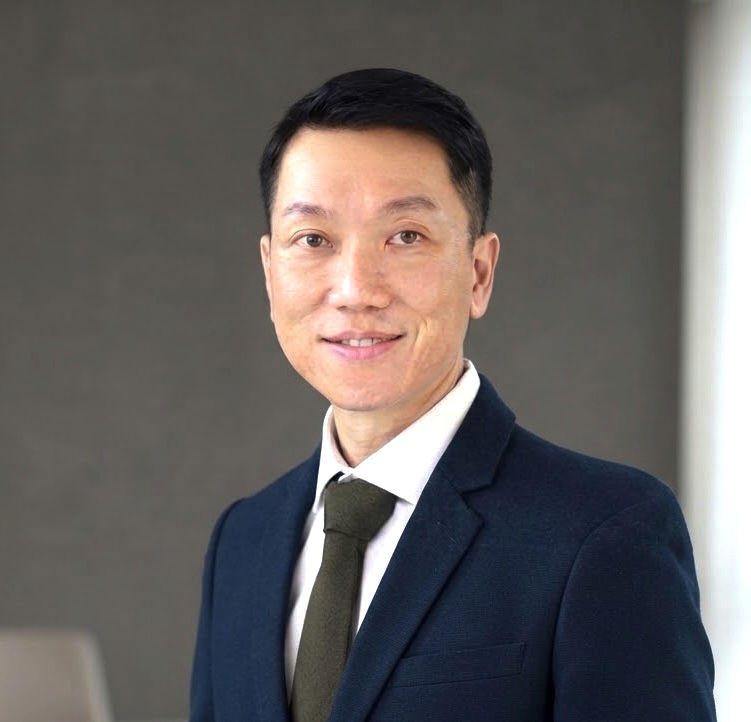
Bridging the Gap: Leadership, People, and the Bottom Line with Kevin Santa Maria

The Bridge is an interview series on Legacy, Leverage & Intergenerational Leadership. This series is brought to you by Bridge to Significance Pte Ltd.

When senior leaders transition from decades in rigid, uniformed service to the fast-paced commercial world, the friction can be immense.
For Kevin Santa Maria, whose distinguished four-decade career spans senior commanding roles in the Navy and public service, stepping into civilian organisations like Mindef revealed an unexpected paradox.
While the military is overtly hierarchical, Kevin found it operated with a surprising degree of flatness and agility, empowering junior officers to experiment and speak up.
In contrast, corporate environments often hid behind rigid top-down structures where the "boss is always right" and psychological safety was frequently sacrificed at the altar of short-term metrics.
Today, as a senior advisor on leadership development at Mindef and a senior director at Optimentum Consulting, Kevin brings a rare blend of philosophy and pragmatism to the modern workplace.
Far from being a soft-hearted idealist, Kevin approaches leadership with clear-eyed commercial reality.
He knows there is real utility in focusing on people
—not just because it feels right, but because the work is cut in half if the right people are properly motivated.
The Hard Truth About Self-Reflection and Culture
Kevin’s leadership philosophy begins with an unsparing look in the mirror.
Reflecting on his transition and his extensive work revamping training programs—including helping establish a major Leadership Academy in 2012—he offers a blunt assessment for anyone stepping into command:
whatever you think of yourself when you look in the mirror, you are likely wrong.
In a corporate culture driven by relentless bottom lines and hyper-competition, new leaders often arrive with a "sledgehammer" mentality, eager to impose changes without listening.
Kevin cautions against this.

In his book, Leaders Start With Themselves:- The Six Fundamentals of Reflective Leaders, Kevin shared that true leadership starts with self-awareness and humility. Spending the first three months listening rather than dictating is not a sign of weakness; it is a strategic necessity to understand the organisation's heartbeat.
This philosophy directly challenges the prevailing tech-sector mantra of "move fast and break things".
While Kevin acknowledges that bold experimentation has its place, he draws a hard line when corporate speed begins breaking people's lives.
A "hire and fire" culture might deliver quick quarterly results, but it fosters a climate of fear. When employees are terrified of losing their jobs, they simply tow the line, and innovation quietly dies.
The Pragmatic Utility of People-Centric Leadership
Critics might look at servant leadership—prioritising people, empathy, and organizational service over personal status—and wonder how it survives in a dog-eat-dog market.
Kevin’s answer is unapologetically pragmatic.
Leadership is never a binary choice between empathy and execution; it requires a delicate, contextual balance.
Kevin is entirely focused on making the bottom line work.
However, his decades of experience have taught him a fundamental operational truth: if you spend your time fighting fires because your team is disengaged, your business will suffer.
Citing the Gallup State of the Workplace Report—which highlights widespread employee disengagement—Kevin points out the massive productivity left on the table when leaders treat human capital as disposable.
By contrast, when leaders invest up to 60% of their time in developing, trusting, and empowering their people, the return on investment is tangible.
Motivated teams take ownership, solve complex problems independently, and drastically reduce the need for constant micromanagement.
As Kevin puts it, you give people the benefit of the doubt until they prove otherwise. It is a system built on trust and accountability, proving that putting people first is ultimately the smartest commercial strategy.
Navigating the Third Act
As he looks to the next three to five years with Optimentum Consulting, Kevin is crystal clear about his mission.
Having retired from public service with numerous accolades, he is no longer chasing financial metrics or operating within the constraints of high-overhead consultancies.
Instead, he applies a rigorous filter to his advisory work: he only partners with leaders who are genuinely committed to organisation transformation. If a CEO or middle manager comes looking for a superficial certificate or a quick fix to check a corporate box, Kevin is more than willing to walk away.
For the younger wave of tech-native founders who have never known a world without the internet, Kevin’s advice serves as a vital anchor.
Amidst the obsession with rapid scaling and automated workflows, the timeless fundamentals of human connection remain paramount.
Ultimately, Kevin Santa Maria’s journey from naval command to corporate advisory embodies a powerful synthesis: a deep philosophical belief that leadership is a profound privilege, paired with the sharp, pragmatic realisation that sustainable business success begins and ends with motivated, empowered people.
----------
Media contact: ian.gan@smaths.com


Comments